It is 3 p.m. on a Tuesday. You have been sitting since lunch, and your lower back has gone from a dull hum to a tight band you can feel with every breath. Maybe it is the drive home on the 163 you are already dreading, or the neck that has been stiff since you slept wrong on Sunday.
If that sounds familiar, you are not alone, and you are not being dramatic. Back and neck pain are among the most common reasons people come to see us. And one of the first questions we hear is a fair one: does acupuncture actually work for this?
Here is the honest answer, in plain words.
So, does acupuncture work for back pain?
For many people, acupuncture can be a helpful part of a plan to ease back and neck pain. It is not a promise, and it is not a cure for any condition. Research is mixed in places, and every body responds differently.
Here is what trusted sources say:
- The National Center for Complementary and Integrative Health (NCCIH), part of the National Institutes of Health, summarizes reviews of the research. It reports that acupuncture was more effective than no treatment for back or neck pain, and more effective than sham (fake) acupuncture in the studies that compared the two. It reports the same for osteoarthritis pain, and says acupuncture may reduce how often migraines happen.
- In 2017, the American College of Physicians published a guideline on low-back pain. For short-term back pain, it suggests starting with options that do not involve medication, such as heat, massage, acupuncture or spinal manipulation. For ongoing back pain, it lists acupuncture among the first options to consider, alongside exercise, rehabilitation programs and mindfulness-based stress reduction.
- A large NIH-funded trial published in 2025 followed 800 adults aged 65 and older with chronic low-back pain. People who received acupuncture along with their usual care reported less pain-related disability, at 6 and 12 months, than people who had usual care alone. The lead researcher described the size of the benefit as modest but positive and lasting, and the team saw very little in the way of side effects.
Researchers still debate how much of the benefit comes from the needles themselves and how much from the overall experience of care, such as time, touch and a calm room. That is a fair debate, and we would rather tell you than pretend it is settled. What matters for you is whether it helps you feel and move better, with a licensed provider who listens.
What about sciatica?
The sciatic nerve starts in the lower back and runs down the back of each leg. MedlinePlus describes sciatica as pain, tingling, numbness or weakness in the leg that can feel like a dull ache or a burning sensation, most often on one side of the body.
The research here is less certain. NCCIH says acupuncture may be helpful for sciatica pain, but that the quality of the research is not good enough to be sure. The 2017 ACP guideline also noted that evidence was not strong enough to say what works best for pain that travels down the leg. So we will not promise you anything. What we can say is that people with sciatica-type discomfort come to us for support with muscle tension, comfort and daily movement, and we work alongside your doctor when needed. If your leg is weak or numb, or your pain is getting worse, see your doctor first (more on that below).
Who at Calm helps with pain?
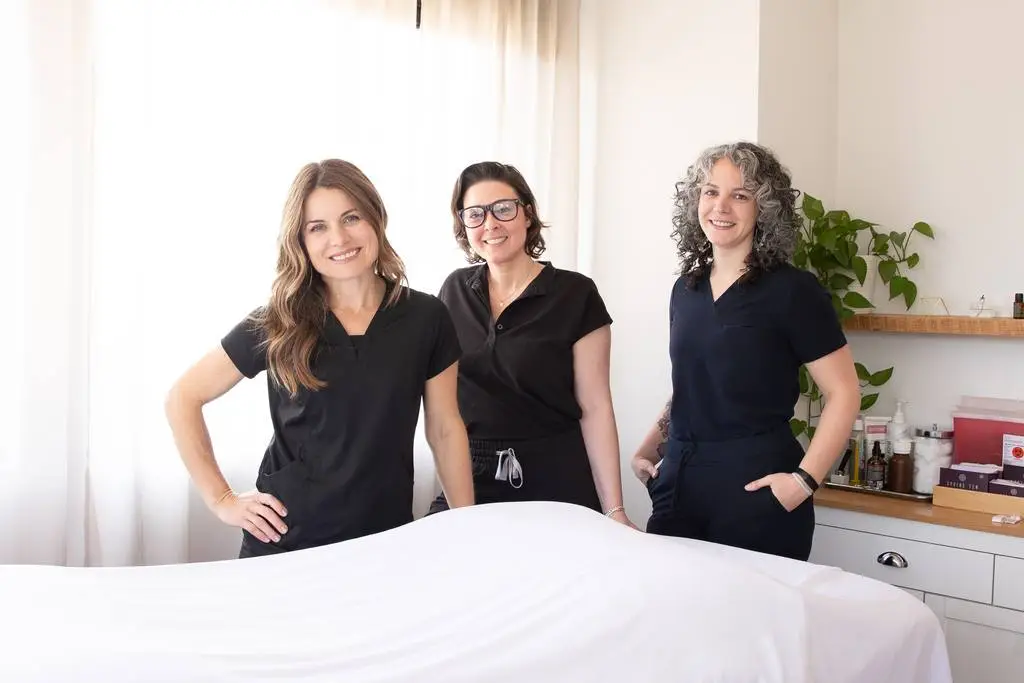
Our team is all women, and several of us support people with pain. For back pain, neck pain and injuries, we start with Dr. Ciara Wiegand, DACM.
Dr. Ciara Wiegand, DACM focuses on pain management, sports medicine, orthopedics and stress relief. She completed an additional orthopedic program with Matt Callison, and our team often hands her their more complex orthopedic cases. If you have an old injury that keeps flaring, a stubborn neck, or a shoulder that does not move the way it used to, she is a wonderful first person to meet.
Dr. Carly Shalhoub, DACM brings orthopedic acupuncture to back pain, neck pain, joints, muscle tension and sports injuries.
Michelle Dunn, L.Ac. supports orthopedic pain and women’s wellness, and also offers cupping and light massage.
Every practitioner here is skilled and can help with most things. We simply want you to meet someone whose focus matches yours.
What a first visit looks like
Your first visit is 90 minutes, and it includes plenty of time to talk, plan and rest.
- We listen. We ask about your pain, your injuries, your sleep, your stress and what a good day would look like for you.
- We explain the plan. You hear what we suggest and why, in plain language, and you decide what feels right.
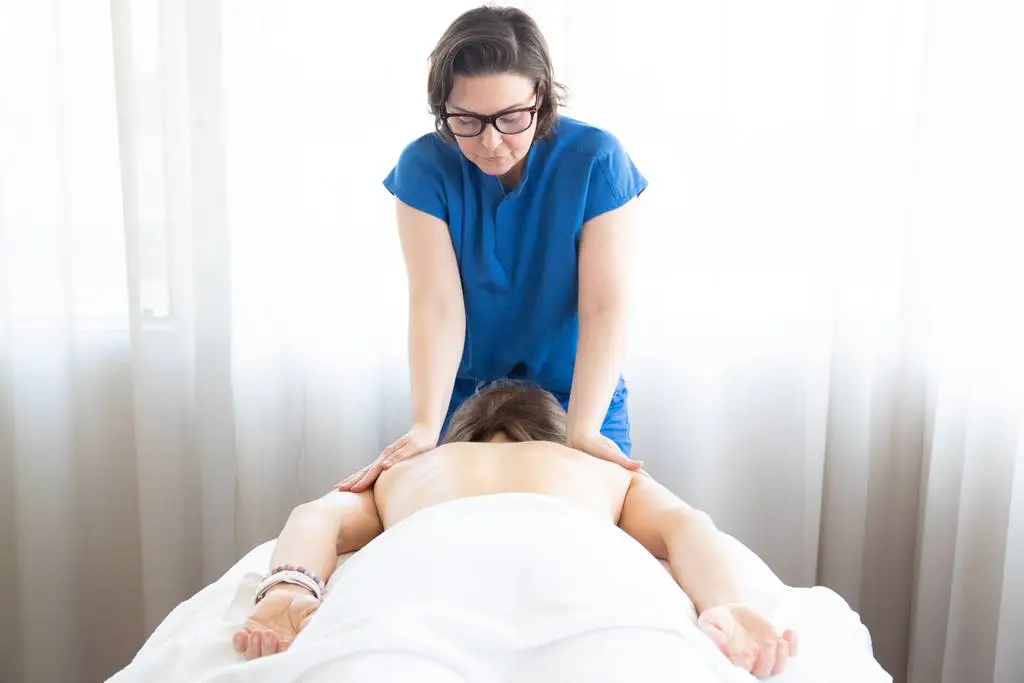
- You rest. Acupuncture is done while you lie comfortably. Many people find this a calm, quiet part of the visit.
- We agree on next steps. That may include how often to come in and simple things to try at home.
Follow-up visits are 60 minutes.
Small things to try between visits
These are general ideas, not a prescription:
- Keep moving gently. MedlinePlus (from the National Library of Medicine) says bed rest is not recommended for back pain and advises staying as active as you can, cutting back only for the first couple of days.
- Try warmth or a cold pack, whichever feels better.
- Break up long stretches of sitting with a short walk. A lap around the parking lot works.
- Notice where you hold tension when you are stressed, often the shoulders and jaw, and let them drop.
When to see a doctor first
Acupuncture is a support, not a substitute for medical care. Please follow any warning sign your doctor has told you to watch for. MedlinePlus also says to contact your provider right away if you have:
- Back pain after a severe blow or fall
- Severe pain that does not let you get comfortable
- Weakness or numbness in your buttocks, thigh, leg or pelvis
- Pain traveling down your leg below the knee
- Loss of control over urine or stool
- Unexplained fever with back pain
- Unintentional weight loss
- Pain that wakes you up at night
MedlinePlus also says to call your provider if back pain does not improve after about three days, or if an episode lasts longer than four weeks. Read the full list: https://medlineplus.gov/ency/article/007425.htm
If you are not sure which group you are in, that is a good thing to ask about in a free consultation. We will point you to your doctor if that is the right next step.
Is it covered by insurance?
Often, yes. Calm is in-network with Cigna, UnitedHealthcare, Blue Shield and VA Community Care for veterans. We also work with PPO plans that have out-of-network coverage. Coverage differs from plan to plan, so we do the billing for you and can help you understand your benefits. Our free consultation is a good place to ask.
Find us in Serra Mesa
We are in Serra Mesa, right next to Tierrasanta, and close to Kearny Mesa and Mission Valley. We are open Monday to Friday 8 a.m. to 7 p.m. and Saturday 9 a.m. to 2 p.m., so an early appointment before work or a Saturday morning can fit around your week.
Calm San Diego
4909 Murphy Canyon Road, Ste 410, San Diego, CA 92123
(619) 686-7493
Start with a free 15-minute consultation
Not sure whether acupuncture is right for your back, neck or shoulder? Talk with us first. In 15 minutes you can tell us what is going on, ask your questions, and hear which of our providers might be the best fit. No pressure, no commitment.
Book your free 15-minute consultation
FAQs
Does acupuncture hurt?
Sensations vary from person to person. The needles are very thin, and many people feel relaxed once they are in. If anything feels uncomfortable, tell us right away and we will adjust.
How many visits will I need?
It depends on you, what brings you in and how long it has been going on. We will talk about a realistic plan at your first visit. We do not promise a set number of visits or a specific result.
Is acupuncture safe?
NCCIH reports that relatively few complications have been reported, and notes that serious problems such as infections can happen when acupuncture is not delivered properly. That is why training and sterile needles matter. Our practitioners are licensed. Please tell us if you are pregnant, take blood thinners or have a bleeding condition.
Can I use acupuncture alongside physical therapy or chiropractic care?
Many people do. Let us know about everything you are doing so we can work in step with your other providers.
This article is general information and is not medical advice. Acupuncture is not a substitute for care from your doctor. It does not diagnose, cure or treat any disease, and results vary from person to person. If you have a medical concern, please talk with your healthcare provider.