
Why Joint Pain Increases in Midlife
For many women, the transition through perimenopause and menopause brings not only hot flashes and mood swings but also unexpected joint pain. A 2024 orthopedic review noted that about 71 % of perimenopausal women experience joint pain. Researchers have coined the term musculoskeletal syndrome of menopause (MSM) to describe this constellation of symptoms, which includes musculoskeletal pain, arthralgia, loss of muscle mass, bone loss, tendon and ligament injuries, and adhesive capsulitis (also known as frozen shoulder). These issues arise mainly due to declining estrogen levels, which affect virtually every connective tissue in the body.
Estrogen’s role in joint health: Estrogen helps maintain cartilage flexibility and stimulates the production of synovial fluid, keeping joints lubricated. When estrogen levels fall, cartilage can degrade more rapidly, leading to osteoarthritis and other degenerative changes. Estrogen also has anti-inflammatory effects; its decline can lead to increased systemic inflammation, contributing to joint stiffness and pain. Additionally, lower estrogen accelerates bone loss (osteoporosis), raises the risk of fractures, and makes joints more vulnerable to injury.
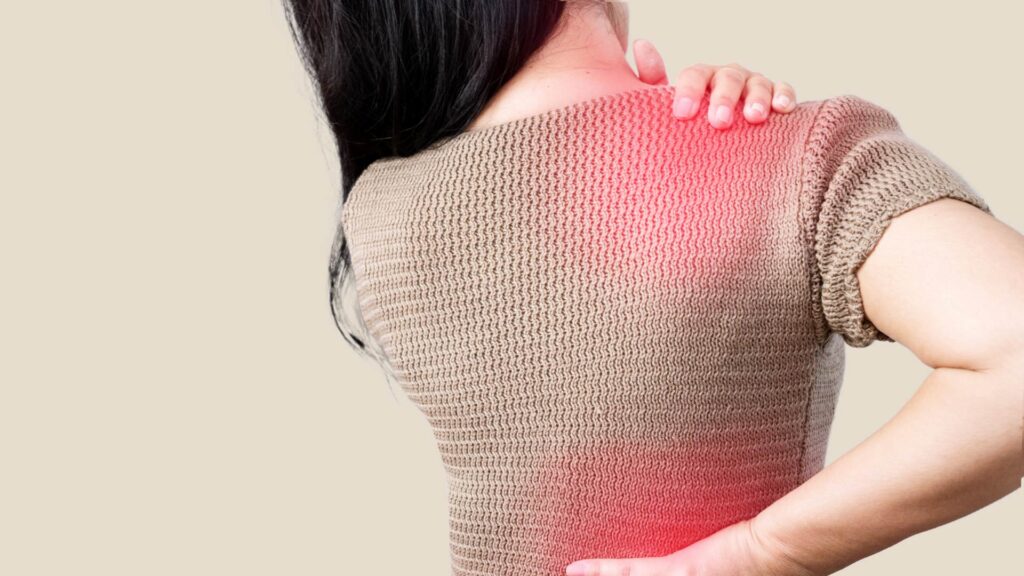
Integrating Western and Chinese Medicine Perspectives
Western medicine often recommends non‑steroidal anti‑inflammatory drugs (NSAIDs), physical therapy, weight management, and exercise programmes to address joint pain. While these strategies can provide relief, they may not address underlying hormonal and energetic imbalances. Traditional Chinese Medicine (TCM) offers complementary approaches that focus on restoring balance, nourishing deficiency, and easing inflammation.
TCM practitioners frequently associate joint pain during perimenopause and menopause with:
- Kidney yin and essence deficiency: The Kidneys govern growth, reproduction, and bone health. As women age, Kidney essence naturally declines, leading to symptoms such as lower back pain, tinnitus, hot flashes, and brittle bones. Nourishing Kidney yin with herbs like He Shou Wu (fo‑ti) and Shan Zhu Yu (cornelian cherry) can replenish essence.
- Liver blood deficiency and stagnation: The Liver stores blood and ensures smooth movement of qi. Blood deficiency may cause dry tendons and ligaments, while qi stagnation leads to pain and stiffness. Herbs like Dang Gui (Angelica root) and Dan Shen (Salvia root) nourish the blood and improve circulation. Gentle stretching, tai chi, and acupuncture help soothe stagnation.
- Spleen qi deficiency and dampness: Weak digestive function can produce dampness, which settles in joints and causes swelling and dull, aching pain. Strengthening the Spleen with warm foods and aromatic spices (such as ginger and cinnamon) and avoiding greasy or raw foods helps minimize dampness.
Acupuncture and Herbal Approaches
Acupuncture: Studies show that acupuncture modulates pain pathways, releases endorphins, and reduces inflammation. Practitioners select points based on each patient’s pattern, often including Kidney and Liver channels to nourish yin and blood, Spleen and Stomach points to resolve dampness, and local points around painful joints. Regular treatments can ease joint stiffness and improve range of motion.
Herbal formulas: Your Calm practitioner tailors herbal prescriptions to individual patterns. Some of the common formulas we use are:
- Du Huo Ji Sheng Tang (Angelica Pubescens and Taxillus Decoction): Widely used for chronic joint pain with cold and dampness; warms channels, nourishes blood, and alleviates pain.
- Zuo Gui Wan (Restore the Left Pill): Nourishes Kidney yin for symptoms such as hot flashes, night sweats, and lumbar weakness.
- Jia Wei Xiao Yao San (Free and Easy Wanderer Plus): Moves Liver qi, nourishes blood, and alleviates mood swings and digestive issues.
Always consult a licensed herbalist for appropriate formulas and dosing.
Lifestyle Strategies for Healthy Joints
- Resistance training and weight-bearing exercise: Strengthening the muscles around joints reduces pressure on the cartilage. Weight‑bearing exercises help maintain bone density. Start slowly with body‑weight movements and gradually add weights.
- Mindful movement practices, such as qigong, tai chi, and yoga, support flexibility and balance without overstressing joints. These exercises also enhance mental focus and reduce stress.
- Anti‑inflammatory diet: Incorporate foods rich in omega‑3 fatty acids (chia seeds, walnuts, fatty fish), antioxidants (berries, leafy greens), and phytoestrogens (soy products). These nutrients help reduce inflammation and may alleviate menopausal joint pain. Limit refined sugars, saturated fats, and alcohol, which can increase inflammation.
- Weight management: Maintaining a healthy weight reduces stress on weight-bearing joints, particularly the hips and knees. Combine moderate exercise with mindful eating to support steady weight.
- Adequate sleep: Poor sleep increases cortisol and inflammatory markers. Practice good sleep hygiene and consider acupuncture, herbal medicine, or breathing exercises if insomnia is present.
Summary
Perimenopause and menopause are profound transitions. Falling estrogen levels can lead to joint pain and a spectrum of musculoskeletal issues. Integrating Western approaches, such as physical therapy, with TCM strategies—acupuncture, herbal medicine, a warming diet, and qi-cultivating exercises—helps relieve pain and restore mobility. By supporting Kidney essence, nourishing Liver blood, and strengthening Spleen qi, women can move through midlife with resilience and grace.